
Predictions, outlooks, forecasts whichever way they are spun, can never be 100% relied on as accurate or an absolute.
Weather forecasting, something we all pay attention to, has spanned for thousands of years with early observations of clouds and astronomy dating back to 650 B.C. to modern-day AI-driven supercomputing. We have the American model (GFS), the European model (ECMWF) and several Mesoscale models all producing varying forecasts due to initial conditions, resolution, data assimilation and, yes, algorithms.
Yet, the accuracy of predicting snowstorms, thunderstorms, tornados and derechos is far from an exact science.
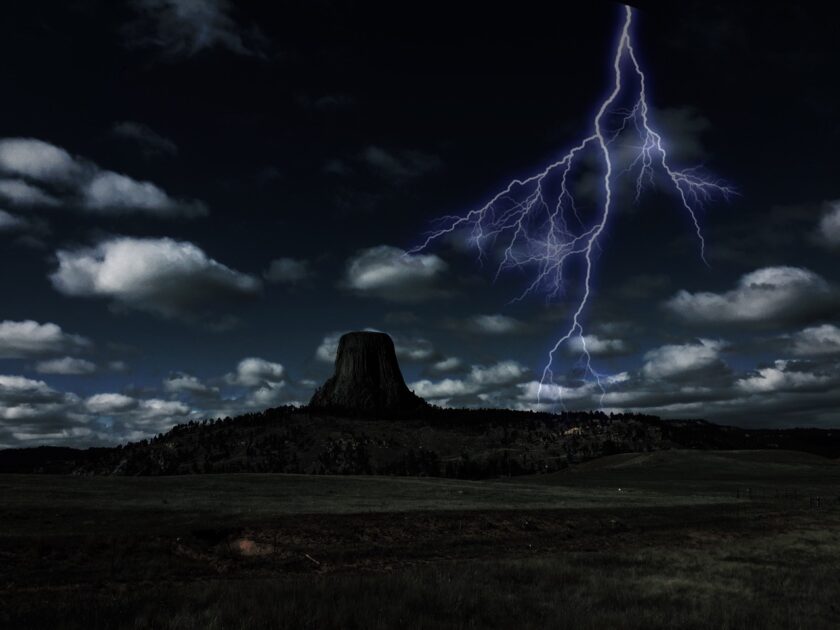
Over the last week, we had to change routes, hotels and plans to avoid being caught in severe weather. Even when the local weather forecast changed to a negligible chance at my husband’s Parent’s location, the storm literally formed above us. Lightning strikes followed by immediate thunder, rain and hail. The 2.5-inch hail and tornado were 30 miles east.
When I was a Financial Controller, forecasting was a monthly endeavor. We would forecast 3 months out with variances to budget and prior month actuals. Sometimes, it was highly accurate if everything went exactly as planned but many times it was considerably off. Equipment would break down, weather events including high winds would shutter facilities and pending sales wouldn’t close. It felt like the equivalent of throwing darts.
Market trends and stock forecasts often don’t even have a 50% accuracy rate. They are directionally useful but not highly reliable. Past performance is not indicative of future results, the mandatory SEC disclaimer.
While AI predictions are a mix of legitimate technological advancement and significant market hype, there will be misses. No one knows where those misses will be or even what other factors will impact its rapid progression.
To theoretically achieve a “perfect” weather forecast that exactly reproduces the actual weather, modelers would need every current condition for every point on the face of the earth. They would also need a model that could take all of these readings and produce the exact weather forecast for each of those points.
Last night, I was watching the storm progression in the same area we had just left on YouTube, the latest trend outpacing The Weather Channel. Storm chasers and spotters were relaying real-time tornado footage. From that perspective, not much has changed since the movie, Twister, 30 years ago. Better technology and tools are used but nothing has replaced having human eyes on verifying its validity.
Experts, influencers and AI wannabes can make all the predictions and forecasts they want. Just know that the validity of such market claims is at most 50% accurate. Flipping a coin or throwing darts may actually be more directionally correct and certainly more fun. It’s not until we have actual footage of the AI in motion, that the validity of the spin will be proven.
In the meantime, embrace the uncertainty, be flexible, stay aware and learn new routes with the tools you currently have.
“Embrace the unknown: it is only there you will find your treasure.” -Will Craig
Can We Predict What Jobs AI Will Take? · Issue 7.4, Fall 2025
Featured Image – Devils Tower National Monument 9.23.2016, iPhone 6.