

Most will agree that your home is an asset. But so is your car and that definitely is not an investment. Your home, however, grows to become the most meaningful, emotional investment you make.
The reason for buying a house is not financial gain. Although it is a tangible asset that makes the investment far easier to comprehend, it is the nostalgia that homeowning creates making the investment so significant. A home exudes real worth and that value is readily apparent to everyone.
Homebuyers, however, are changing their criteria in what they seek. According to Redfin, there are currently 630,000+ more sellers than buyers, the widest margin (47%) since Redfin began tracking in 2013. Although interest rates remain a deterrent, buyers have more options.
While home prices continue to increase, there is also a growing population of sellers who are in denial. They believe their home should sell for top dollar yet it sits on the market month after month or is eventually withdrawn. The reason for the denial, a shifting trend.
The “fixer-upper” is out.
Even though you have a house with several bedrooms and bathrooms, a large kitchen or great room and an impressively green yard, it no longer translates to the most sought-after house. If you haven’t updated anything since the day you moved in 20, 30 or 40 years ago, the reality is that has cost you, not in actual dollars but in resale value. Or if you did spend actual dollars renovating your home, those esoteric wall and carpet colors, as much as you love them, are not driving any return on that investment.
Homes sitting on the market, often referred to as “stale” listings, are typically those that are overpriced, in need of repairs and updating, or possess unique, specialized features or aesthetics that limit the buyer pool. And the kicker that stings the most, people no longer want a fixer-upper.
Reality TV shows made the fixer-upper home and DIY approach popular in the mid-2010’s but Covid-era supply chain disruption and recent inflation have made building materials more expensive along with a shorter supply of labor. The housing market is undergoing a shift.
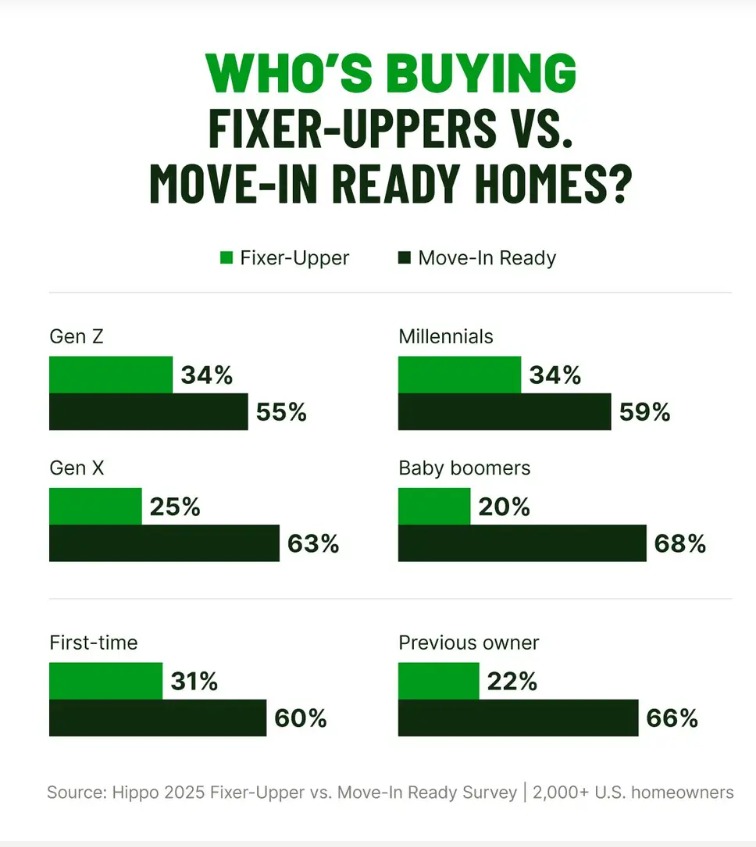
One unsupported report showed as much as 76% of buyers wanted move-in ready homes, especially as a previous homeowner. I definitely see this trend where I now live and was a factor when my husband and I were looking for a house in late 2021. We were deciding between the house we bought and another one. The deciding factor was how much renovation and repair was involved.
The former owner of our current house is in real estate and knew it had to be updated to bring a higher resale value. They moved out in the spring of 2021, had a number of renovations done and then listed it in October 2021. We moved into a “ready” home in January 2022.
What renovations are going to give you the highest return on your investment? This is what the modern homebuyer is investing in.
• Functional Systems: Updated, well-maintained HVAC, plumbing, and electrical systems that are code compliant.
• Updated Kitchens and Bathrooms: Modern fixtures, countertops and energy efficient appliances. (70% – 113% ROI)
• Modern, Clean Aesthetics: Hardwood floors, fresh neutral paint and decor that allow for easy personalization. (up to 107% ROI)
• Structural Integrity: A sound roof, solid foundation and working doors, garage doors and windows. (100% – 349% ROI)
• Convenience and Storage: Often includes garages, finished basements and smart home technology.
• Functional & Flexible Spaces: Adaptable rooms that can serve as a home office, gym, hobby space or for guests.
• Outdoor & Lifestyle Amenities: Patios, decks, front porches that function as extensions of homes for entertainment and curb appeal.
Home renovations are often difficult to do while still living in your home not only with time and money constraints but also a nostalgic one. Home nostalgia is a real and common phenomenon. It is a powerful emotional longing for the comfort, safety and simplicity of the past that can often be stirred by the scents, sounds and familiarity associated with those memories. The thought of disrupting that with something new can be overwhelming to some.
Home ownership, like any other investment, has expenses (transaction costs, repairs, maintenance, property taxes, insurance, HOA fees, etc.), capital gains (appreciation) and loses that can’t offset a capital gain. They become sunk costs. The days of a home being a type of financial investment are waning. I could argue that the home we bought and sold in California was an inadvertent investment since we timed the market just right on buying and selling.
Your home is an investment in the most meaningful asset you will ever make. It may not appreciate into a large financial gain, but it can appreciate into a satisfaction or reward that is only known by those who own them.
Home Sellers Now Outnumber Buyers by 47%: What It Means for Prices
People Don’t Want Fixer-Uppers Anymore—Here’s How That Could Impact Your Home Search
Fixer-Upper vs. Move-In Ready: 1 in 5 Regret DIY Approach
Best Home Improvements to Increase Value | Zillow
Featured Article – this is my 100th posting. Some wise writers have said that it isn’t until you have written a lot, at least a 100 posts, that you only begin to develop writing skills and that most people give up.