

You will not find this compiled list anywhere. Frankly, you won’t find many sources of detailed guidance on managing a 401(k) readily. Many financial firms will offer to manage it for you for a fee and most written guidance is only a high level overview.
While the Reddit and Bogleheads forums are heavily used for the DIY investor, these miss critical information. AI doesn’t always capture the latest regulations.
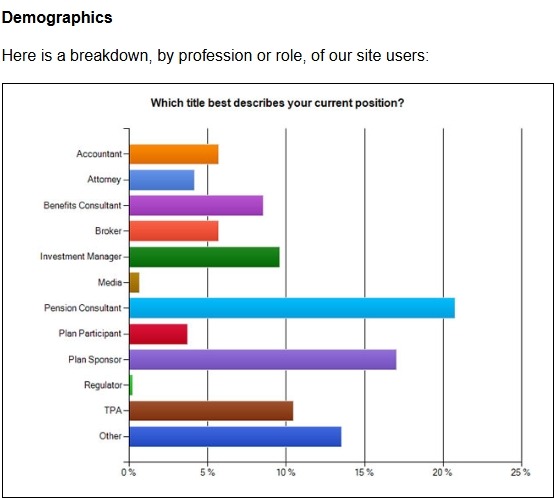
There is one source that is a dedicated help center for the 401(k) and 403(b) but it’s a cumbersome website to navigate and less than 5% of plan participants actually utilize it. The media is even less than that. Since the interface is dated and only recently was updated to a secure (https://) website, it doesn’t readily show in search results. 401(k) and 403(b) Information – 401khelpcenter.com
The history of the 401(k) and how it came to be along with a resource of all the retirement plans, I covered in Retirement is Doing Something Different. There was a Bloomberg opinion piece published last year proclaiming that the 401(k) will be gone within a decade but it doesn’t appear to have gained much traction.
While the retirement plan’s naming conventions aren’t ideal, this is the best we have right now. To make it intriguing, I added a semicolon, sort of a signature trait. My first professional job straight out of college was at Lennar Partners, a subsidiary of Lennar, where we managed a portfolio of assets called the Lehman Westinghouse Real Estate Investment. I was obtaining approval for a large expense and had signed the email or written request with my name followed by H2O(s:) which I used with people I knew well.
This was long before LA H2OS got me into hot water. It was also long before emojis, when written and in-person exchanges were being replaced with digital ones. Not knowing this required the highest level of approval in my naïve professional inexperience, it was forwarded to the highest-level portfolio executive who wasn’t even employed by Lennar Partners. Needless to say, I was extremely relieved when the request was approved and returned to me with a noted nice signature.
These are the things you should know.
Review Your 401(k)
Many make a point to do this review during the holidays before year-end. It establishes a habit to do this annually. However, this year really drill down into the reports, graphs and data that should now be widely available to you with most 401(k) providers, especially Fidelity.
Investment Allocation
Depending where you are at in your career (early, mid or late), does the current investment allocation make sense? Many of us fail to consider this and end up with a very high concentration of stock equity and the reality of very little bonds.
Target Date Funds are increasing in availability within 401(k) plans. They offer a balanced asset allocation becoming more conservative over time. And the need to rebalance becomes less frequent.
Target-Date Funds: What They Are, How They Work | Bankrate
Target-Date Funds Explained: Risk Management and Real-Life Examples
For those of you who have FOMO of not directly investing in the Mag 7 stocks, take a look at your 401(k) funds and one of them will likely be an indexed fund that follows the S&P 500 Index. The top percentage of shares will be allocated to the Magnificent 7 stocks among many others.

Returns
There should be various tables and graphs depicting the 1, 3, 5, 10 Yrs returns along with one for Life. Some funds don’t have this. It could be due to:
• Being a complex, individualized (personal) calculation (money-weighted returns vs. fund returns).
• Being a newly established fund.
• Becoming a phased-out fund requiring you to move the shares to another fund.
• Data lag in reporting.
• Technical or administrative issue.
Example: Northern Trust S&P 500 Index Fund
Quarter-End Average Annual Total Returns
AS OF 09/30/2025
Fund Inception 03/28/2023
Expense Ratio (Gross)
0.0051% AS OF 11/01/2025
|
Return Type |
1 Yr |
3 Yrs |
5 Yrs |
10 Yrs |
Life |
|
FUND Northern Trust S&P 500 Index Fund – DC – Lending Tier Five |
17.59% |
— |
— |
— |
23.15% |
|
PRIMARY BENCHMARK S&P 500 |
17.60% |
24.94% |
16.47% |
15.30% |
24.83% |
|
MORNINGSTAR CATEGORY AVERAGE Large Blend |
14.57% |
22.31% |
14.83% |
13.68% |
— |
Source Fidelity
Expenses
In the example above, you will note the Expense Ratio. Most 401(k) expenses will be in the form of a ratio.
The gross expense ratio is the total operating cost of a fund before fee waivers, while the net expense ratio is the actual fee you pay after the fund company temporarily reduces costs (waivers/reimbursements). The net ratio is what impacts the return in the short-term, but the gross ratio reveals the higher fee that kicks in when waivers expire, showing a fund’s true long-term cost structure.
There are 401(k) plans where sales loads (commissions) are still charged on buying and selling shares. If you are invested in mutual funds within your 401(k), there could be ongoing 12-B1 fees from fund assets used to pay brokers and distributors.
• Review Fee Disclosures: Look at the Summary Plan Description (SPD) and fund prospectuses for footnotes, especially regarding “loads,” “commissions,” “revenue sharing” and “12b-1 fees”.
• Ask Your Provider: Inquire about direct fees (paid from the employer’s account) versus indirect fees (taken from participant assets).
Many plan sponsors are moving towards direct fee models, where administrative costs are paid directly by the company, making it easier to see and control the total expenses while allowing employees to choose lower-fee investment options.
If you have a financial advisor or planner managing other assets for you, they may provide advice of managing your 401(k) for no additional management fee. Your employer may also offer financial or 401(k) specific resources as benefit to you. However, be aware that 401(k) providers readily advertise help for managing your 401(k) assets that will include a separate fee that can range from .5% – 2% of your assets.
401(k) Fees: The Hidden Retirement Killer You Can Stop Today
The Rule of 55
I didn’t know about this rule until recently. The Rule of 55 is an IRS provision letting you take penalty-free withdrawals from your most recent employer’s 401(k) or 403(b) plan if you leave your job in the year you turn age 55 or later (age 50 for public safety employees).
It is an opportunity to avoid the usual 10% early withdrawal penalty prior to age 59 1/2. Withdrawals are still taxed as ordinary income and it doesn’t apply to IRAs. It does require you to stay in your employer’s plan so you can’t roll it over to an IRA. It only applies to your current/last employer’s plan, not any previous plans.
It’s crucial to check your specific plan details and tax implications.
What Is The Rule Of 55 And How Does It Work? | Bankrate
The Pro-Rata Rule
Another rule that I didn’t know about after many years of contributing to a Backdoor Roth IRA. It is known as the IRA Aggregation Rule that applies when a traditional IRA or 401(k) contains both pre-tax (deductible) and after-tax (non-deductible) funds. The rule dictates that any money withdrawn or converted from these accounts must consist of a proportional mix of both taxable and non-taxable funds, based on their ratio in the total balance.
It’s complex and many financial experts we had hired over the years did not know about or understand how it worked.
If you change jobs frequently and have rolled multiple 401(k)s into IRAs, you will have substantial funds in your traditional IRA accounts which cause the Roth conversions to be mostly taxable. Meaning, you should generally only do Backdoor Roth IRA conversion if your total traditional IRA account balances are zero (or close to zero) both before and after the contributions/conversion events.
You can avoid this if you are able to rollover a former employer 401(k) into your new employer 401(k) or ensure that all contributions to a traditional IRA was made with pre-tax dollars (self-employed or 1099 employee). If the new employer doesn’t allow rollovers or the prior employer is no longer in existence, you are forced to rollover your 401(k) into an IRA. Cashing it out will incur even higher tax consequences.
It is advantageous to understand how this rule works and how it may apply to your specific circumstances. It is consequential that you find a CPA/Tax Professional who can provide the analysis and guidance for you because this segues into the latest IRS requirement.
There aren’t many articles or resources that explain this rule well. I had written a Google Gemini prompt that explained it in a straightforward way, but I deleted the tab and couldn’t replicate the prompt.
401(k) Rollovers, Backdoor Roth Conversions, and the Pro-Rata Rule
Catch-up Contributions: New Requirements for 2026-2027
Catch-up contributions allow employees age 50 and older to save beyond regular annual limits. Super Catch-up contributions are available to those employees age 60 to 63.
New IRS rules tied to the SECURE 2.0 Act, passed a few years ago, now require certain higher earners ($145,000 or more) to make those catch-up contributions exclusively on a Roth basis. That means contributions are made with after-tax dollars instead of pre-tax, but with tax-free withdrawals in retirement.
The final regulations state that full applicability of the Roth catch-up rule will generally take effect for most plans beginning after December 31, 2026. The catch-up rule technically applies as of January 1, 2026, however, the 2027 date essentially gives employers and plans a grace period (of sorts) as they work in good faith to ensure their plans fully comply with the new rules.
You will need to plan for this if you fall within these parameters or are approaching age 50.
New IRS Start Date for Mandatory Roth Catch-Up Contributions | Kiplinger
These are the biggest considerations hitting your 401(k) account that you should know and the consequences that could ensue. The most important takeaway, consult a tax professional to determine how these and other tax changes might impact your 401(k) contributions and overall retirement strategy. And for me, keeping our tax returns forever.
Featured Image – Capitol Reef National Park, Utah. Photographer Cary Wauters. The far left, lower domes and buttes are the early years of your 401(k). The middle ones moving to the right are more recent years of your 401(k) with other investments (domes and buttes) in the foreground.
To share this article, copy and paste this link into a text or email. The 401(k:) Hit List
Or if remaining anonymous is truly important, print it and put it in someone’s inbox or on their desk or in an envelope with a Forever stamp and their address.