
While this could be pegged as some dated idiom or country song from the 1980’s, its relevancy is important now more than ever.
The underlying concept first appeared in Aesop’s fables, but the wording was coined by William Shakespeare in his 1596 play The Merchant of Venice.
Something may look highly valuable, attractive or perfect on the surface, but upon closer examination it often lacks genuine worth or credibility.
It describes what social media has become, the roller disco of the 2020’s showcasing the equivalent glittery gold pants along with who can out boogie everyone else to get the most attention. AI has made what we see into for the most part, slop, AI slop to be precise. There are, however, exceptions. The good can only be found by scrolling through the slop. So, we unintentionally spend more time on these platforms (the intent) to uncover the gems that are worthwhile.
My husband and I were recently in Holland, MI during their annual Tulip Festival and found the tulips to be past their prime. While we were waiting for our food at a local downtown restaurant, he turned his phone to me and flashed one of the selfies we had taken together. I undeniably hate taking pictures because of my overcompensation not to blink or squint. So much so that we have a running joke not to replicate the wedding photo where I look like a pop-up cartoon character.
It was good, too good considering my lack of photogenic flair and asked him to send it to me since Apple’s photo sharing is glitchy. He sent it to me not by the usual text but via ChatGPT and I immediately knew he had digitally altered it and too good to be true. In the flash that I saw it, I hadn’t even noticed the abundance of tulips in the background and why he didn’t linger showing it to me. The original had so few he told ChatGPT to pack the background with tulips and to give us a sunkissed look.
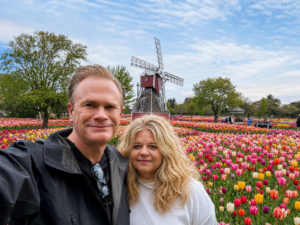
It was deceptively good and fooled our parents even when we were attired in Dutch costumes. They thought we had rented them. From their perspective, the idea of a picture from us being digitally altered was inconceivable.
I see these “digitally enhanced” photos everywhere especially on social media and LinkedIn. They are also beginning to infiltrate the Leadership pages of a company’s professional website. I can tell when an executive’s photo has been digitally enhanced. The signs of an AI-enhanced photo are no longer glaringly obvious and far more subtle. Distinguishing that subtlety can be difficult, but it also can be learned.
Photoshopping has been around since the late 80’s but was mostly done by professionals in marketing and advertising. Minor lighting or color adjustments were acceptable to most while extensive alterations were seen as deceptive and unethical. With digitally enhanced AI photos becoming more mainstream, does this same view uphold?
Actually, it does.
AI-enhanced photos are only viewed as acceptable for conceptual or fantasy contexts. Acceptance plummets when the photo depicts real-life events, authentic moments or the news. Public trust drops significantly without clear disclosure.
People and companies who are considering using digitally enhanced photos should take pause. Presenting yourself online in a manner that isn’t true to yourself or your brand can cost you. Like it did with the dating apps. From its 2021 peak, Bumble’s share price has collapsed more than ninety percent erasing most of its $13 billion valuation. All of them are on a downward spiral.
Transparency is key along with the context in how AI is used. Even smaller companies like plumbers, heating/A/C and other contractors are beginning to use AI. If their systems aren’t adequately tested before roll-out (one my husband called was an endless AI loop) and they aren’t open to accepting critical feedback, they will lose customers.
When AI is implemented thoughtfully in a sustainable, well-planned, trustworthy manner, companies along with their customers will thrive. When it is ruthlessly pursued without regard to critical insight or the customer, it won’t be sustainable and will cost far more than lost trust.
“Trust is currency right now and in short supply.” -David Gaz, Managing Partner at the Bureau of Small Projects
Is It OK to Alter Photos of Yourself to Look Better Online? – The New York Times
57% of Consumers Can’t Identify AI Photos (Here’s Why) | Clutch.co
Why Dating Apps Were Always Doomed
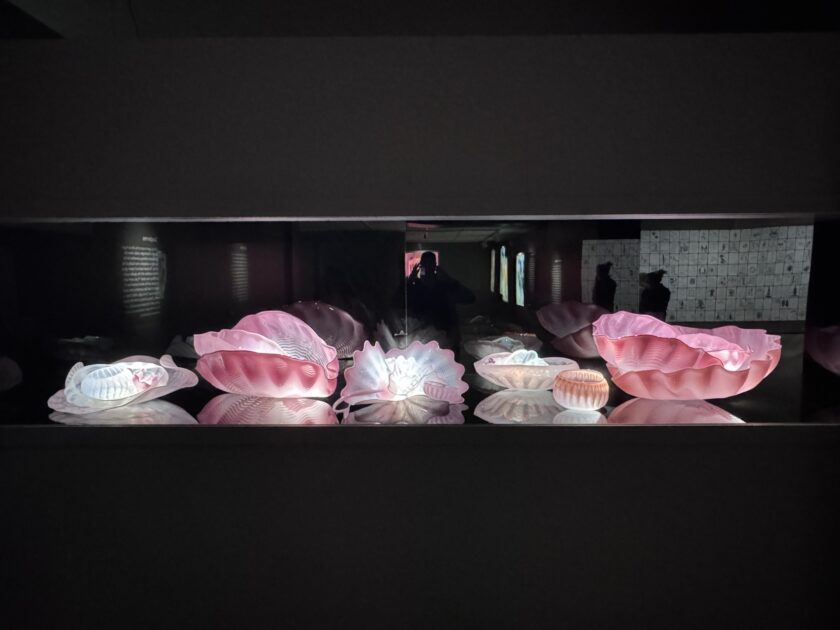
Featured Image – Chihuly Glass (not gold) exhibit – Frederik Meijer Gardens & Sculpture Park, Grand Rapids, MI. Photographer C.N. Wauters. Original photograph.