

As a seasoned consumer, we continue to use and buy the brands we love even if we have to pay a little more, search a little longer or even wait a bit for a deal or something new.
Amazon, Apple, Netflix, Alphabet (Google, Android, YouTube) all released significant revenue and earnings growth for the first quarter of 2026. Even McDonald’s, Walmart and Target are expected to report increased revenue and earnings despite soaring gas prices and increased food costs.
It is expected to be one of the strongest earnings seasons in two decades.
But how can this be when gas prices are surging and consumer sentiment is flailing?
First, we need more context.
ABC News (Disney), NBC News (Comcast), CBS News (Paramount Skydance), CNN (Warner Bros. Discovery being acquired by Paramount Skydance) are all publicly traded companies. Disney’s stock price has remained stagnant over the last 5 years, and the rest are 50% – 75% down over the same period.
FOX News (FOX Corporation) is also a publicly traded company but has experienced 50% growth in stock price over the last 5 years. However, revenue and earnings for the first quarter are expected to decline.
The news organizations are all part of a dying sector. Their “brand” is in jeopardy. They need to put whatever spin they have left out there to get as many people as possible to pay attention to them. For them, it is a matter of business life or death.
Starbucks, Tesla, Mercedes, FedEx, CVS, Walgreens and Spectrum are also faltering with declines in revenue and earnings. The rise and fall of companies aren’t groundbreakingly new. When one company fails others rise and takes its place. The more we demand what the company does, the more valuable the company becomes.
Why have so many public companies posted record revenue and earnings, because they have developed the innovation, scale and means to provide what the masses demand at a price they are willing to pay.
My first job out of college was at a subsidiary of publicly traded Lennar Corporation (LEN), a homebuilder. I also worked at a start-up internet service provider just before the dot.com bubble. Both were great experiences, but I ended up working most of my career at public companies. When revenue unexpectantly dropped or expenses rose, the expectation was to find other ways to mitigate the impacting change.
Lennar is still in business today, the internet service provider isn’t, nor is the company that acquired them in 2000.
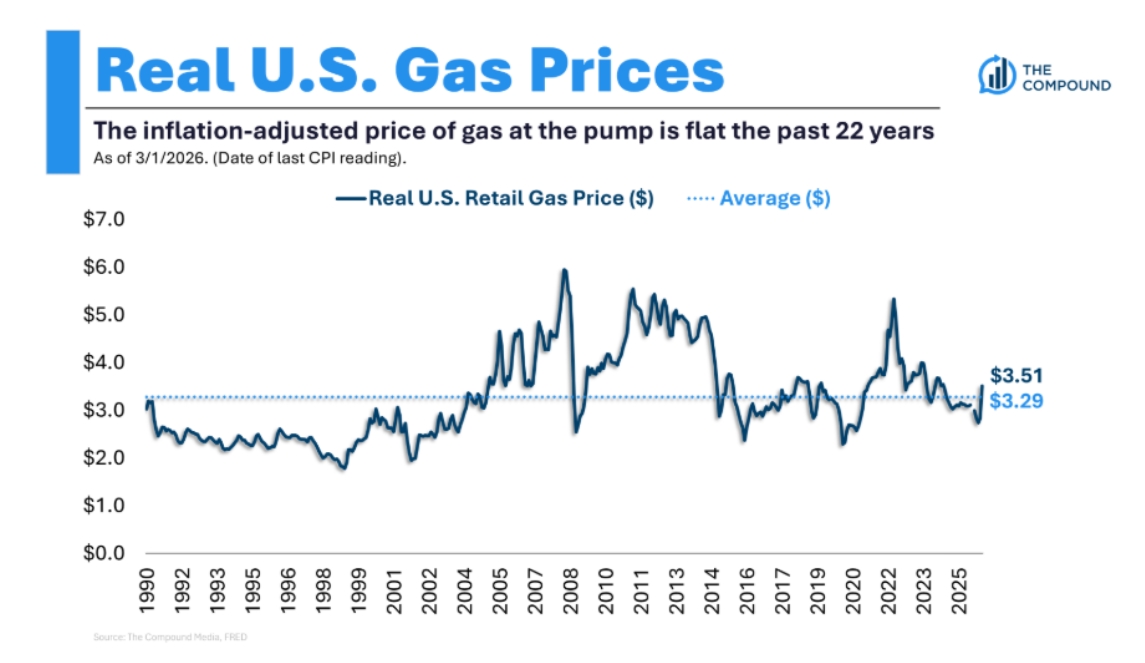
Rising gas prices are nothing new either. When I worked for Allied Waste now Republic Services, the business of transporting trash, we had the highest inflation-adjusted gas prices to contend with and we did. Routes and overtime were tightened, travel and entertainment budgets were cut and larger purchases were delayed. Rate increases to revenue were tied to the prevailing CPI (Consumer Price Index) or built into contracts so rising gas prices had to be offset by reducing other expenses and increasing operational efficiencies.
Until you have actually worked at a publicly traded company for several years and understand how they operate and compete, you technically don’t have skin in the game. Those who study and model public companies, the stock markets and the economy come very close but until they work inside a public company, they will never experience the nuance of the culture, internal politics and the pressure of operations to what makes the successful ones survive through whatever unknown is thrown at them.
For the ones who don’t survive, they know what could’ve been done differently in hindsight so as not to make the same mistake twice but sometimes it’s too late and the market has already shifted.
While spending on goods has softened in some areas, many consumers are prioritizing splurges, sustainable choices and brands that align with their values. Customer sentiment isn’t flailing everywhere, only on the brands we no longer find valuable and television, including the news, is one of those brands.
A company’s stock price is determined by EPS (Earnings Per Share), P/E (Price to Earnings Ratio) and dividends, not rising costs, supply chain issues or general consumer pessimism the news wants us to believe. Every company faces risk. However, it’s the one thing that has never been experienced that will separate the ones who find a way to survive and those who won’t.
Featured Image – I still have a Gucci handbag, a one-off I got at Marshalls. I prefer Michael Kors (Capri Holdings, NYSE: CPRI) and will find deals at the outlet or on their website but brand loyalty and the stock price are waning.
The End Of Network TV’s Grip On The Culture In 3 Stark Charts